
So, I was updating a website I hadn’t touched for months. I originally built it around 1½ years ago.
The problem was… the repository wasn’t well documented.
I wanted to go back and document all the changes I made, so I checked my commits… and there were a lot of them. It was honestly a mess. 😑
I started looking for a way to get all my commits with specific details like:
- commit hash
- URL
- date
- author
- message
I found the GitHub REST API, but it returns a huge amount of data… way more than I actually needed.
And I definitely didn’t want to go through everything manually.
So I tried looking for a tool that could do this for me… but I couldn’t find anything. 🫤
At that point, I didn’t really know what to do.
So I asked ChatGPT if it could help me build something for this.
It gave me a Python script.
There was just one problem—I’m on my phone.
Yes, I code on my phone 😅 My laptop is currently broken, so this is all I have right now.
I tried running the Python script using a few mobile apps, but it didn’t work.
So I asked again: “Can we just do this in JavaScript instead?”
It said yes.
And that’s where everything started.
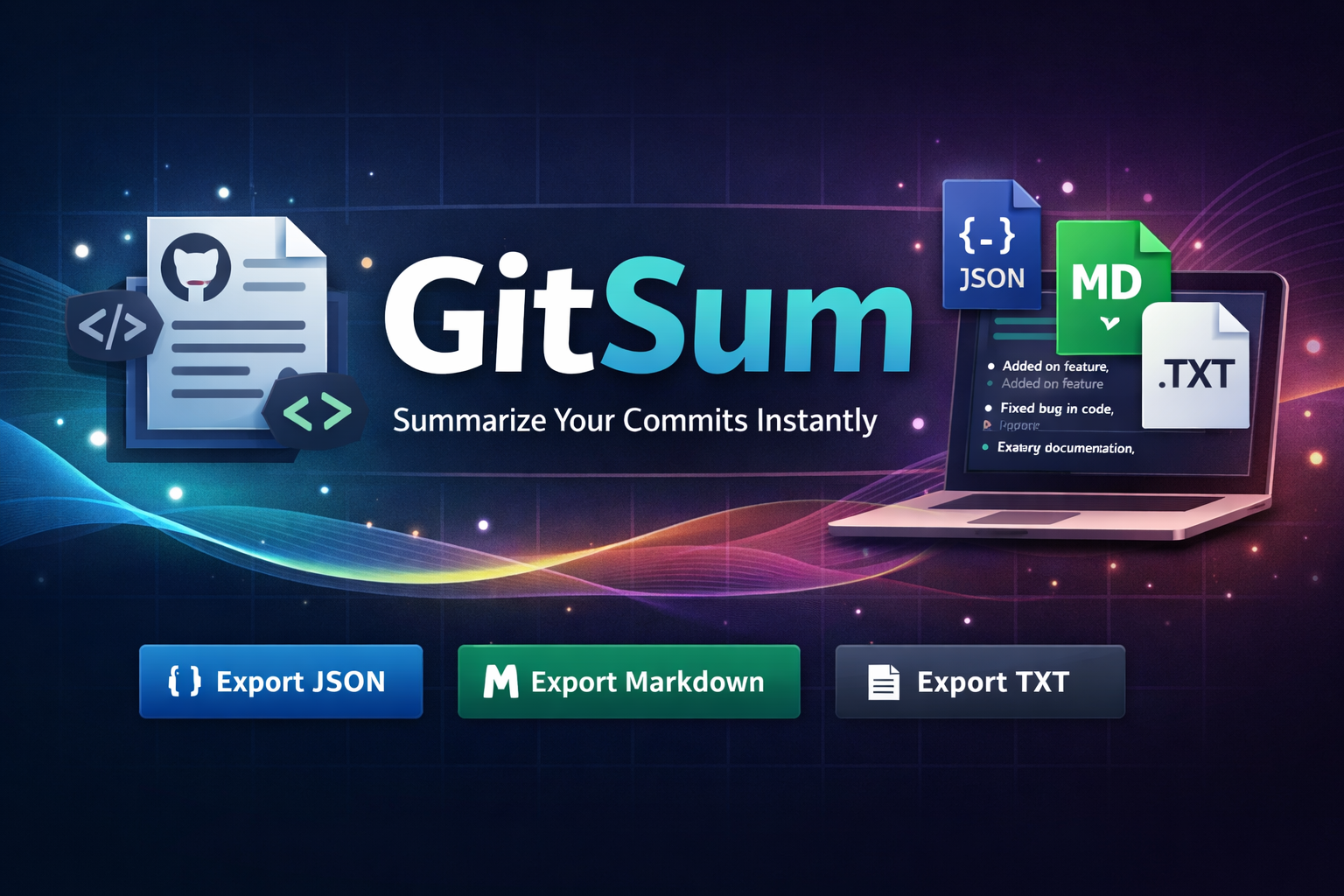
I began building GitSum, step by step, with the goal of solving this exact problem. Eventually, I got it working and published it on GitHub.
Later on, I discovered another project with the same name—but it’s a CLI tool.
I don’t think it’s a big issue, but I’ll look more into it. Same with licensing… I’m still figuring that out since this started as a kind of “vibe-coded” project.
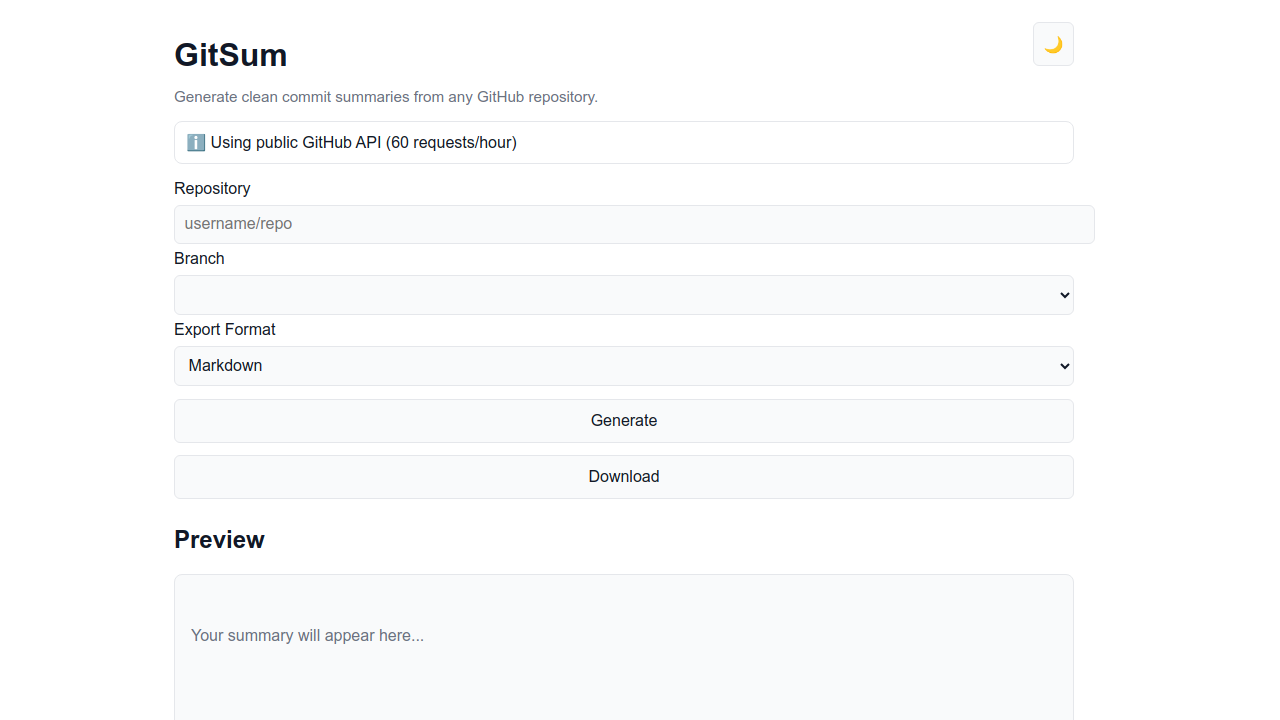
Through this project, I learned a lot.
- Semantic versioning
- GitHub releases
- Structuring and organizing code
- Improving UI and user experience
I didn’t expect to enjoy it this much, but I actually had a lot of fun building it.
Right now, I’m still improving GitSum.
I want it to be useful—not just for me, but for other developers who’ve gone through the same situation.
Because if you’ve ever looked back at your commits and thought: “what is going on here?”
Yeah… that’s exactly why I made this.